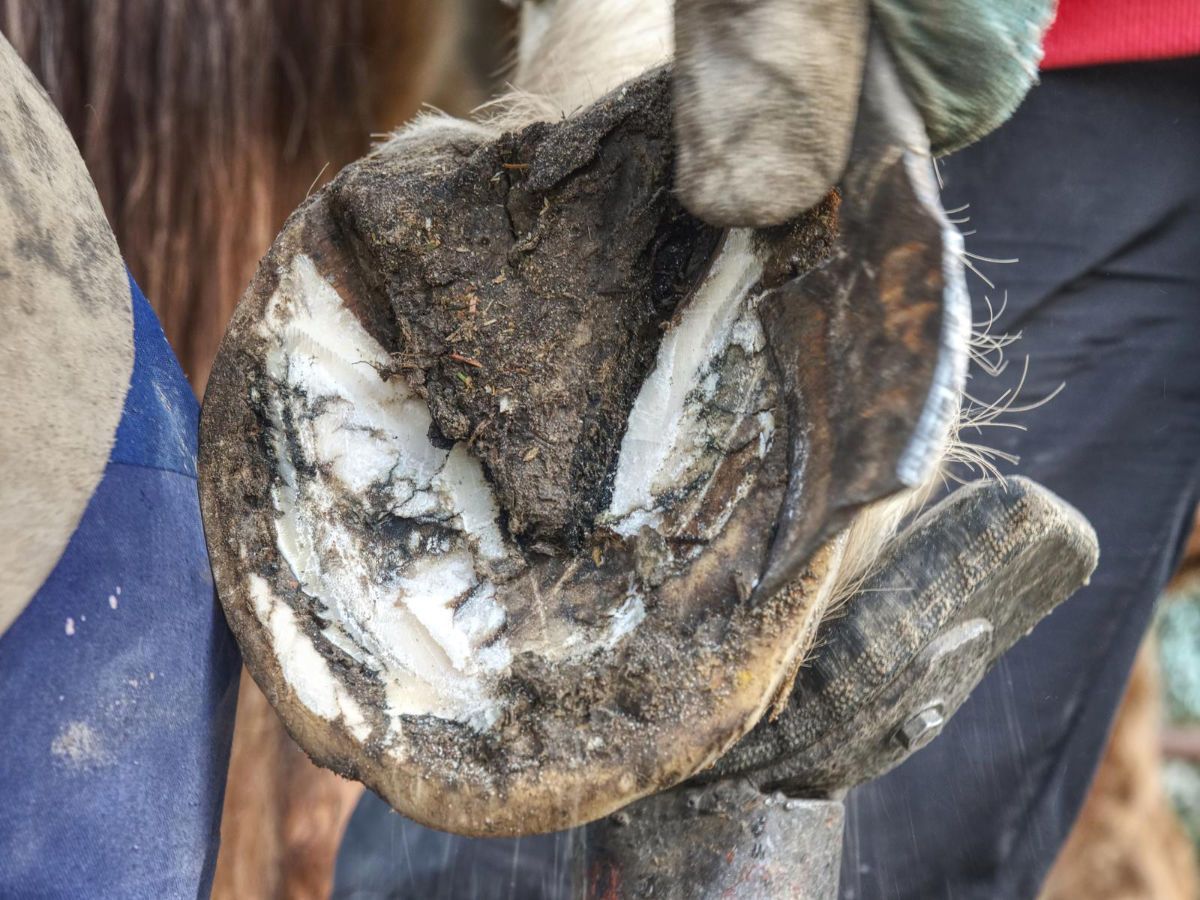
Managing hoof abscesses in horses: a step-by-step guide
What is an abscess?
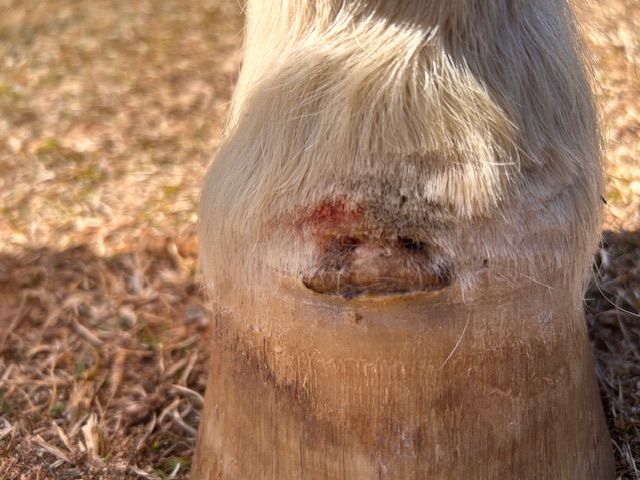
A horse hoof abscess is a localized bacterial infection trapped inside the hoof capsule, causing intense pressure, heat, and sudden, severe lameness (though not always – I’ve had many abscess without taking a lame step). They can occur when bacteria enter via hoof cracks, injuries, or the white line, often during wet, muddy conditions. Other factors can be extreme ground changes, for instance after getting a significant amount of rain after a dry spell, or vice versa, as hard ground can cause bruising. Another common event in winter is when mud freezes and creates very hard, rigid ground to make for bruising on thin soled horses. Poor hoof balance can also be a trigger, as imbalances can create corns and pressure points.
**If you have a thin-soled horse, it’s a great supportive/preventative tactic to boot them for turnout when the ground is extremely hard or when mud freezes.
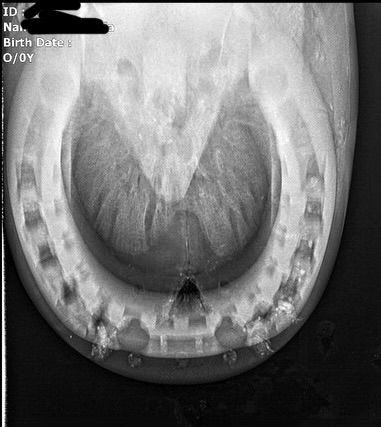
If your horse is lame, the first step is to notify your veterinarian. Once an abscess is confirmed or if your veterinarian recommends treating it as such, here is a step-by-step protocol on management. Radiographs are always appreciated to see the extent of the infectious tract or where it might possible release.
1. Identification and Diagnosis (done by veterinarian in the field)
- Clinical Signs: Sudden onset of severe lameness, increased digital pulse, heat in the hoof, sensitivity to hoof testers, and possible swelling of the limb or coronary band.
- Physical Examination: Clean the hoof thoroughly. Use hoof testers to localize sensitivity. You can also palpate around the foot to feel for areas of concentrated heat or soft spots. The soft spot is likely where the abscess will release. Typically the horse will not be able to weight the infected foot, so picking up the opposing limb is very hard for them.
- ***Remember, abscesses can “swim around” in the capsule.
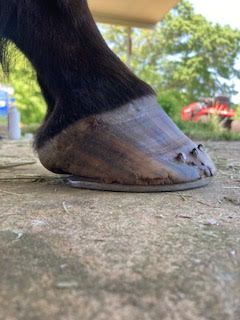
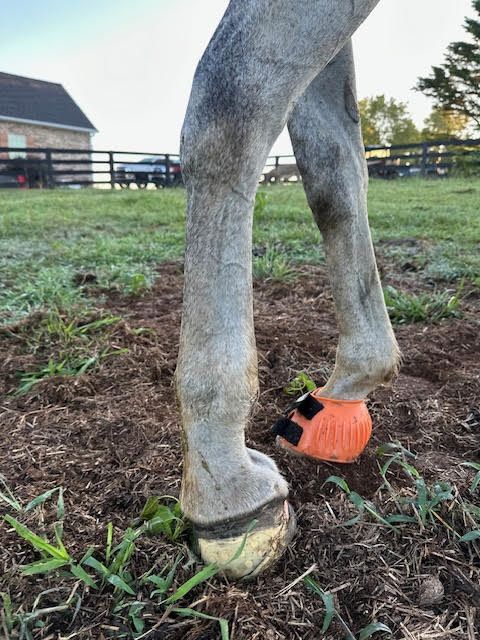
- A common presentation is pointing of the toe, shown below:
2. Soaks: For help on Epsom salt soaks, watch this video to see the process in action.
· Epsom salt soaks are recommended to draw out the infection.
· Supplies: soaking boot or soft feed pan, Epsom salts, hoof pick, warm water
· Process: mix 1 cup of salt per gallon of warm water in a sturdy rubber pan or soaking boot, ensuring the water covers the coronary band. Soak for 15–30 minutes, 1–2 times daily.
3. Wrapping:
· After soaking, recommend keeping infected foot in a boot. This can be done in two ways.
IF YOU HAVE RIDING BOOTS OR CLOUD BOOTS:
· Simply wrap the foot in a diaper, orienting the “baby butt” part over the heel and securing in the front of the limb. Size 1 diapers fit most feet.
· Optional additions: Lather sole (if that’s where the soft spot is) with green Epsom poultice or animalintex pad. I prefer the pads to the Epsom poultice, as the Epsom poultice can cover up the ability to see or smell the drainage.
· Baby powder the boot and put it on over the diaper. Be sure that boots are worn on BOTH fronts (balance and comfort for the opposing limb).
· The diaper will allow you to assess drainage and infectious smell.
If you DO NOT have a riding boot or cloud boots:
· You will need to wrap the hoof in a duct tape bootie.
· For help with wrapping, watch this video for guidance
***WRAPS AND BOOTS TO BE CHANGED DAILY FOR SOAKING AND ASSESSMENT
4. Abscess Drainage
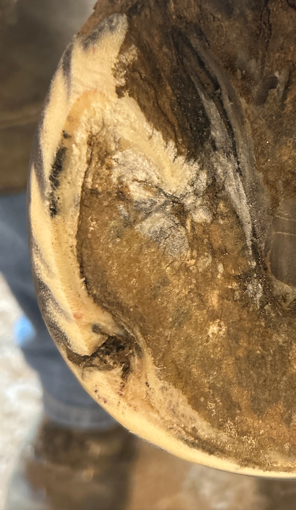
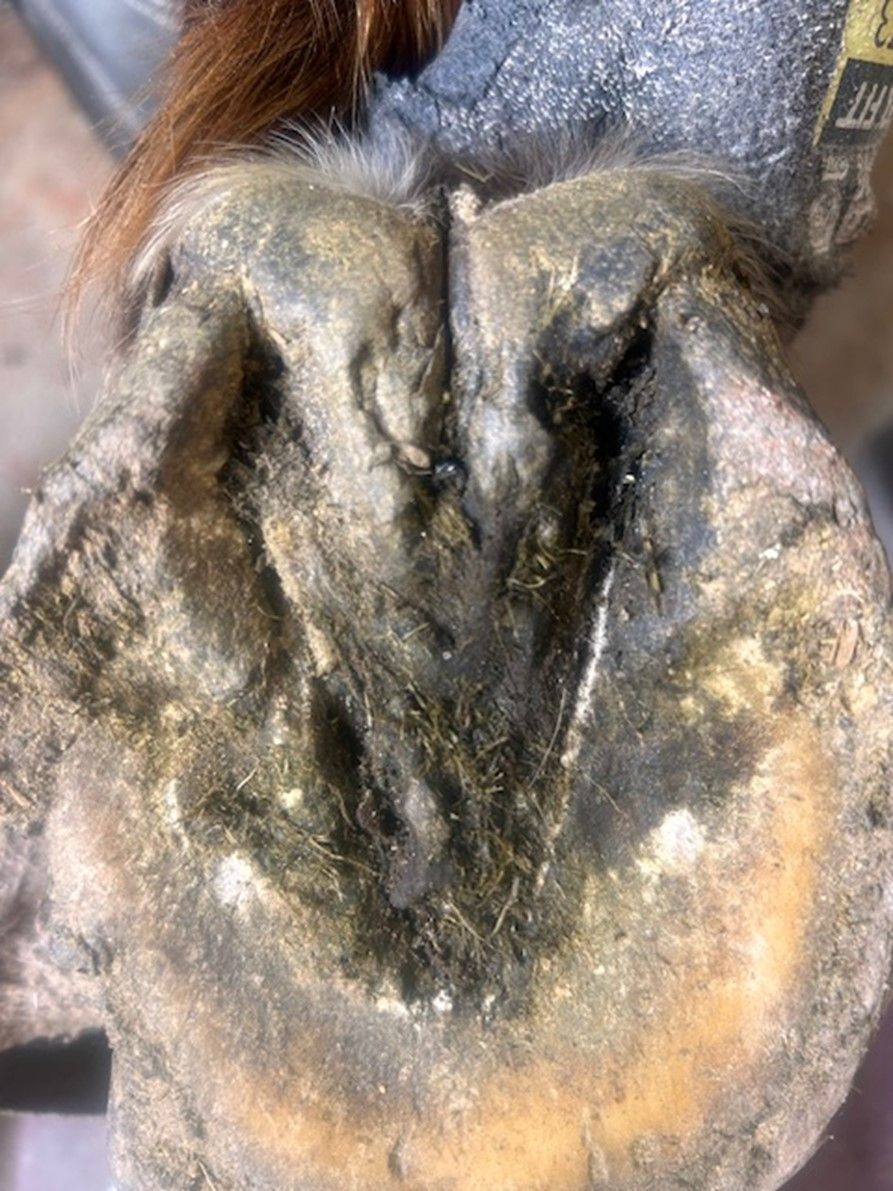
· Once drainage is identified on the diaper, please text me a picture of your finding. The drainage will present as puss, often yellow and will smell putrid. Search around the hoof capsule to identify the abscess tract, and please send me a photo of that, as well.
o If on the coronary band, you will feel a horizontal slit just below/at the hairline. If it is a bar abscess, often there will also be an additional tract found at the heel(s). If there is a tract at the toe, often there will be another tract just opposing it at the top of the hairline. These are not rules, just common patterns.
· My personal rule is if it takes more than 7 days for the abscess to drain (considering you’ve already spoken with your veterinarian at onset), please communicate with them that there is a lag time in drainage. Additional measures may be appropriate.
5. Soaking regimen after rupture:
- Recommend switching soaking solution to an antiseptic product.
- CleanIt Hoof Soak Solution is my personal favorite.
- To make the product last, use half of the powder in half a gallon of warm water. Store the rest of the bottle in the refrigerator. This solution is good for 24 hours. Soaking back-to-back is advisable.
- For the “fuming phase” (see label) I recommend just taking a grocery bag or a Ziploc bag and putting over the foot, secured with a little duct tape.
- This process is time consuming, best to park your horse in front of hay net or a meal for entertainment.
- Vetericyn Hoof Soak is also great. Can be purchased at Tractor Supply Co, or amazon
o ***Please follow directions on product labels for them to work as intended.
- Frequency of soaks after rupture: pending on the size of the abscess, I recommend alternating between Epsom salt soaks (to continue drawing out the infection) and antiseptic soaks. Typically, this only takes a few days. Continue to send me photos of drainage.
- Example: can do two days of CleanIt and then the third day do Epsom salts again if still draining. If drainage stops after second CleanIt soak, no further soaks needed.
- Continue with booting with diaper or making bootie during this process.
- Pain level and heat in hoof should decrease as drainage continues. If not, please notify your vet immediately.
6. Pain Management and Supportive Care
· Speak with your vet about candidacy for NSAID (such as bute) to help with pain management
· Remember that inflammation will help to push out the abscess. The more they can move, the quicker it will rupture.
· Keep the horse in a clean, dry environment to prevent further contamination.
· Heavily bed stall for comfort. If you do have cloud boots, booting both feet will help protect the opposing limb, as it is working double time.
· No forced exercise at this time.
· **Body work is contraindicated during this time, as it can destabilize the body’s coping postures. Bodywork AFTER the abscess has ruptured and healed a bit is encouraged.
7. Aftercare
· Once drainage ceases and the horse is comfortable, discontinue aforementioned protocols.
· If the abscess involved the sole, it may be appropriate to boot for a few days to allow the foot to harden. Imagine you had a blister burst on the bottom of your foot and you’re walking on “fresh skin.” It may take a few days for it to toughen up, same with an abscess. Give them time and protection. Topicals typically aren’t necessary for this, just keeping their feet dry and clean. Though Artimud would be appropriate in some cases.
· If the abscess was at the hairline, it is recommended to keep that tract clean. Use a syringe to flush out the tract daily to keep it clean of debris. This flush can be done with water, diluted apple cider vinegar (50/50 water/AVC), or diluted chlorhexidine (2TBs chlorhexidine in one gallon water). You are welcome to pack the slit with Artimud to promote healing.
o Note: hairline abscesses will be visible on the capsule until they grow out completely. Abscesses on the sole tend to heal relatively quickly. Often they can create corium scaring, and you will see a blemish or deviation with how the sole grows/heals. This is not unlike getting an injury in your own nail bed and now your nail grows differently.
· Gradually return the horse to normal activity as advised by a veterinarian or farrier.
· Schedule a follow-up examination to ensure complete healing.
911 - When an abscess turns into an emergency:
· Again, it is crucial to keep your veterinarian updated through this process. It’s better for them to be aware.
· If the abscess does not rupture after 7-day soaking protocol to draw out infection, please notify your vet that it still has not ruptured. (Some vets may want to know sooner)
· If the horse develops fever, swelling in the distal limb that does not subside, or pain level rises.
· Hoof abscesses do have the potential to cause osteomyelitis, which is infection of the bone. This can be fatal and requires immediate veterinary attention. Often this is treated with regional limb perfusions (antibiotic administered directly into the distal limb), magot debridement therapy (safely removes necrotic tissue), and/or aggressive topical antibiotic treatment.
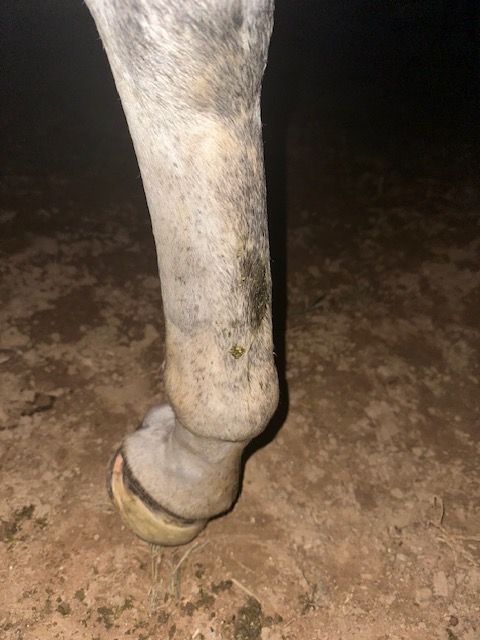
Chronic, recurrent abscessing:
Speak with your veterinarian about testing for PPID, as uncontrolled ACTH can contribute to chronic abscessing. These are typically on various feet.
Other possibilities that can contribute to chronic abscessing (esp. if on the same foot) would be a keratoma. A keratoma is a benign growth, or a disorganized collection of keratin, that imposes on the coffin bone. They can cause lameness and chronic abscessing. These are typically visible on the solar aspect of the hoof, as they tend to create a deviation of the sole into the whiteline. Your hoof care provider should be able to identify this, though a series of radiographs and veterinarian assessment are needed to confirm. Note: not all keratomas are problematic, I have many horses on my books that don’t experience issues from them. They’re typically not a problem until they’re a problem.